

Turn feedback into a next step
Review the evidence, discuss what matters, and choose a small action your team can check at the next feedback cycle.
Collecting feedback is the start of the work. This guide helps you move from responses or retro cards to a decision the team can understand.
1. Read the original feedback
Section titled “1. Read the original feedback”Open the survey responses or retro board. Read a range of answers, including those that do not match the most common theme. Check which question people were answering and when they answered it.
Keep observations separate from explanations. “Three people mentioned waiting for reviews” is an observation. “Reviewers do not care” is an explanation that the feedback may not support.
2. Explore a focused question in Ask
Section titled “2. Explore a focused question in Ask”Select the relevant survey or closed retro as the source. Ask a question such as:
What are the main blockers in this feedback? Give the supporting evidence and note any disagreements.
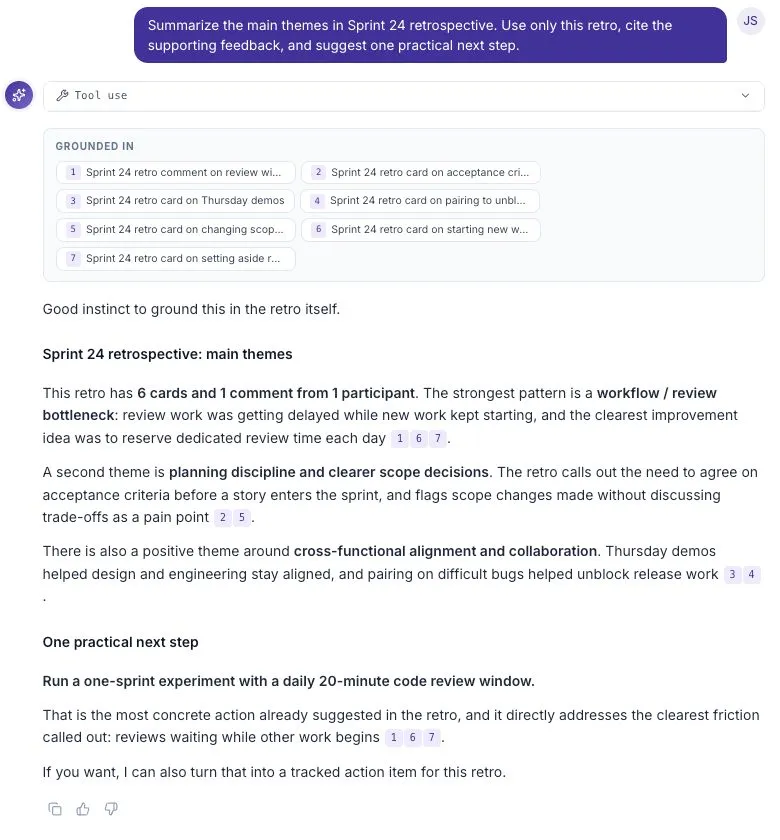
Read the citations and sample size. If you need to compare periods, select both sources and name the periods in the question.
3. Check the conclusion
Section titled “3. Check the conclusion”Before presenting a theme as a finding, ask:
- Is it supported by more than one example?
- Are the examples about the same problem?
- Did enough people contribute to support the conclusion?
- What would change your interpretation?
Do not turn a small sample into a statement about everyone. If the evidence is unclear, say what you still need to learn.
4. Choose a small experiment
Section titled “4. Choose a small experiment”Pick one change the team can try and review. Make it specific enough that people know what to do differently.
| Vague action | A clearer experiment |
|---|---|
| Improve communication | Post a short decision note after each planning discussion |
| Make reviews faster | Reserve 20 minutes each afternoon for pending reviews for one sprint |
| Improve onboarding | Ask the next new teammate to try the setup guide and record where they get stuck |
Name an owner and a review date. In a retro, record this in the relevant card or group’s comment thread.
5. Close the loop
Section titled “5. Close the loop”Tell the team what you heard, what you will try, and when you will check back. At the next survey or retro, ask whether the change helped.
Keep the original question wording consistent when comparing ratings. If you change the wording or audience, explain that when discussing the result.